
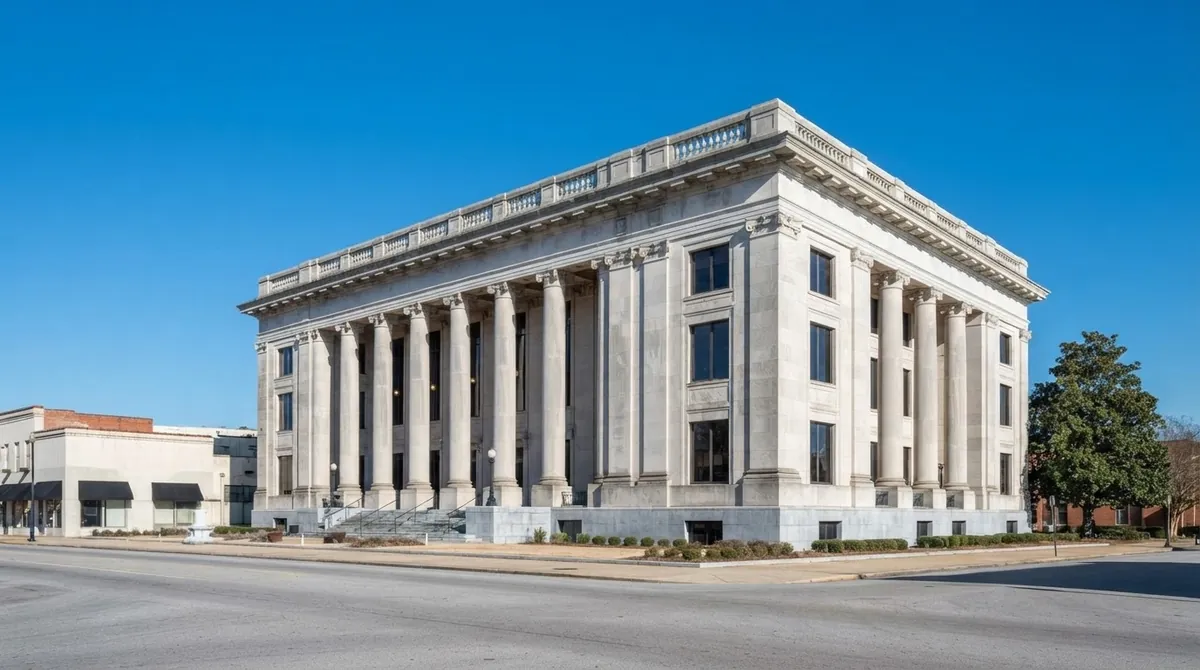
Johnston County court records in North Carolina are maintained by the Clerk of Superior Court and are accessible through online tools, official court portals, and directly at the court office. JohnstonCourt.us will help you find public information about court records in this county. Additional resources include the Johnston County page on the North Carolina court system portal, the Court Records section, and the clerk's office at the courthouse in Smithfield.
Johnston Court System Overview
Johnston County is part of Judicial District 11 in North Carolina, which exclusively serves this county. The District Court and Superior Court operate at the Johnston County Courthouse in Smithfield. Magistrates, who are judicial officials under the chief district court judge, handle minor cases, issue warrants, and set bail. The Superior Court handles serious criminal cases (felonies) and civil claims over $25,000, while the District Court deals with smaller claims, family law, and misdemeanors.
Courts Serving Johnston
Residents of the county are served by several courts of different jurisdictional levels.
State Courts
Federal Court
Johnston County falls under the jurisdiction of the U.S. District Court for the Eastern District of North Carolina.
Bankruptcy cases are handled by the U.S. Bankruptcy Court for the Eastern District of North Carolina with the same contact address in Raleigh.
What Types of Cases Johnston Courts Hear
Johnston County courts hear a wide range of cases. Here are the main categories:
- Felonies (serious crimes) — Superior Court
- Misdemeanors and infractions — District Court
- Civil cases of various levels — depending on the claim amount
- Small claims — Magistrate
- Family law: divorce, custody, alimony
- Probate, guardianship, conservatorship
- Juvenile and child protection cases
- Traffic violations and DWI
- Adoption and termination of parental rights
District Court Cases in Johnston
The District Court of Johnston County handles misdemeanors, civil cases with claims up to $25,000, family cases — including divorces, custody, and protective orders — as well as appeals from magistrate decisions. A district court judge presides over these hearings. Criminal cases come here after charges are filed or through law enforcement citations, and civil cases after a complaint is filed with the clerk's office. If a felony defendant is entitled to a probable cause hearing, the case is initially heard in District Court and then transferred to Superior Court. The court schedule is published on the county's website.
Magistrate Court Cases in Johnston
Magistrates in Johnston County are judicial officials who work around the clock. They accept applications for arrest warrants, set initial bail, and conduct small claims hearings with amounts up to $10,000 according to North Carolina law. Additionally, magistrates handle traffic violations, issue search warrants, and conduct some DWI-related procedures. Civil cases with amounts over $10,000 are transferred to District Court. Preliminary hearings in felony cases also begin at the magistrate level, which determines if there is sufficient cause to transfer the case to Superior Court.
Family Law, Probate, and Juvenile Matters in Johnston
Family Law
Divorces, child custody, alimony, protective orders (DVPO), paternity establishment, and termination of parental rights are all handled by the District Court. To file for divorce, you can use the free document packet on the NC Courts portal. Divorce certificates are issued by NC Vital Records or the court clerk in the county where the case was filed.
Probate Matters
Probate, guardianship, and conservatorship cases are handled by the Clerk of Superior Court. The clerk acts as a judge in probate matters in North Carolina — approving wills, appointing executors, and overseeing estate management.
Juvenile Matters
Cases under the Juvenile Justice Act and Child Protective Act are heard in District Court in a closed setting. Juvenile records are confidential under state law. For more information, contact the court clerk's office.
How Cases Move Through the Johnston Court System
- Case Initiation. A criminal case begins with a complaint or arrest warrant; a civil case with a complaint filed with the clerk's office; a family case with a petition.
- Judge Assignment. The clerk registers the case and assigns a number. A judge is appointed based on the case type and schedule.
- First Hearing. In criminal cases — arraignment; in civil cases — preliminary scheduling conference.
- Pre-trial Phase. Parties exchange evidence (discovery), file motions. In criminal cases, plea negotiations may occur.
- Trial or Settlement. The case concludes with a sentence, jury verdict, settlement, or default judgment.
- Post-judgment. The convicted receives a sentence. Parties have the right to appeal: from District Court to Superior Court, from Superior Court to Court of Appeals.
Court Administration, Local Rules, and Public Access in Johnston
The administrative district court judge of Judicial District 11 oversees the operation of Johnston County courts. The Clerk of Superior Court's office is responsible for record-keeping, payment processing, and issuing document copies.
Local district court rules and session calendars are available on the Johnston County page of the NC Judicial Branch portal. All North Carolina counties have transitioned to the eCourts (Odyssey) system, allowing for online court record searches.
According to Chapter 132 of the North Carolina General Statutes (Public Records Act), court records are public, except for juvenile cases, sealed records, and records expunged by court order. Paper case materials can be viewed by visiting the clerk's office in the county where the case is registered.
Hearings are generally open to the public. To participate remotely, check if this option is available by calling the court office at 919-989-5100.
Court Records and Related Court Resources in Johnston
- Online Case Search. The NC Courts Services portal allows searching for court records, hearing dates, and case statuses through the eCourts system.
- Session Schedules. Criminal and civil calendars for Johnston County are published on the Clerk of Court page of the county's official website.
- Forms and Self-help. The free Guide & File service on the NC Courts portal helps prepare documents for court filing.
- Public Records Request. Requests can be submitted through the Request a Public Record page or in person at the clerk's office.
- Criminal Background Check. A certified check within one county is conducted by the Clerk of Superior Court. For a statewide check, contact the NC State Bureau of Investigation.
- Inmate Search. Search for individuals in the local detention center through Johnston County's online services. For state-level inmate searches, use the Offender Search of the Department of Correction.
- Johnston Correctional Institution. The state correctional facility is located in Smithfield; information is available on the NC DAC website.
- Sex Offender Registry. The statewide registry is available on the NC SBI website.
- Land Records and Deeds. The Register of Deeds Office of Johnston County maintains deeds, property records, and vital records. Online deed searches are available through the Online Record Search page.
- Sheriff's Office. The Johnston County Sheriff's Office publishes arrest records and provides inmate information.